ISCD’s Regional Panels support the development of regional meetings of the ISCD, including educational courses, aim to grow ISCD membership, and advocate for access to bone densitometry and osteoporosis care in their region.
Learn more about the recent activities of some of our ISCD Regional Panels.
Latin America Panel
The International Society for Clinical Densitometry (ISCD) successfully presented the ISCD–FEMECOT Joint Symposium during the XXXV Mexican Congress of Orthopedics and Traumatology (FEMECOT 2025) in Guadalajara, México. The session brought together more than 150 orthopedic surgeons and trauma specialists, underscoring the growing collaboration between ISCD and FEMECOT.
This year’s symposium emphasized the critical role of bone health assessment in orthopedic surgical candidates, highlighting how DXA, TBS, and periprosthetic bone monitoring contribute to improved surgical planning, perioperative optimization, and long-term implant outcomes.
Led by faculty from the ISCD Latin American Panel, the symposium covered accurate BMD measurement, advanced densitometry tools, and evidence-based strategies for integrating bone assessment into orthopedic decision-making.
This joint session marks another milestone in the ISCD–FEMECOT collaboration agreement, which aims to expand education, promote certification, and strengthen the use of clinical densitometry in orthopedic and trauma care across Latin America.
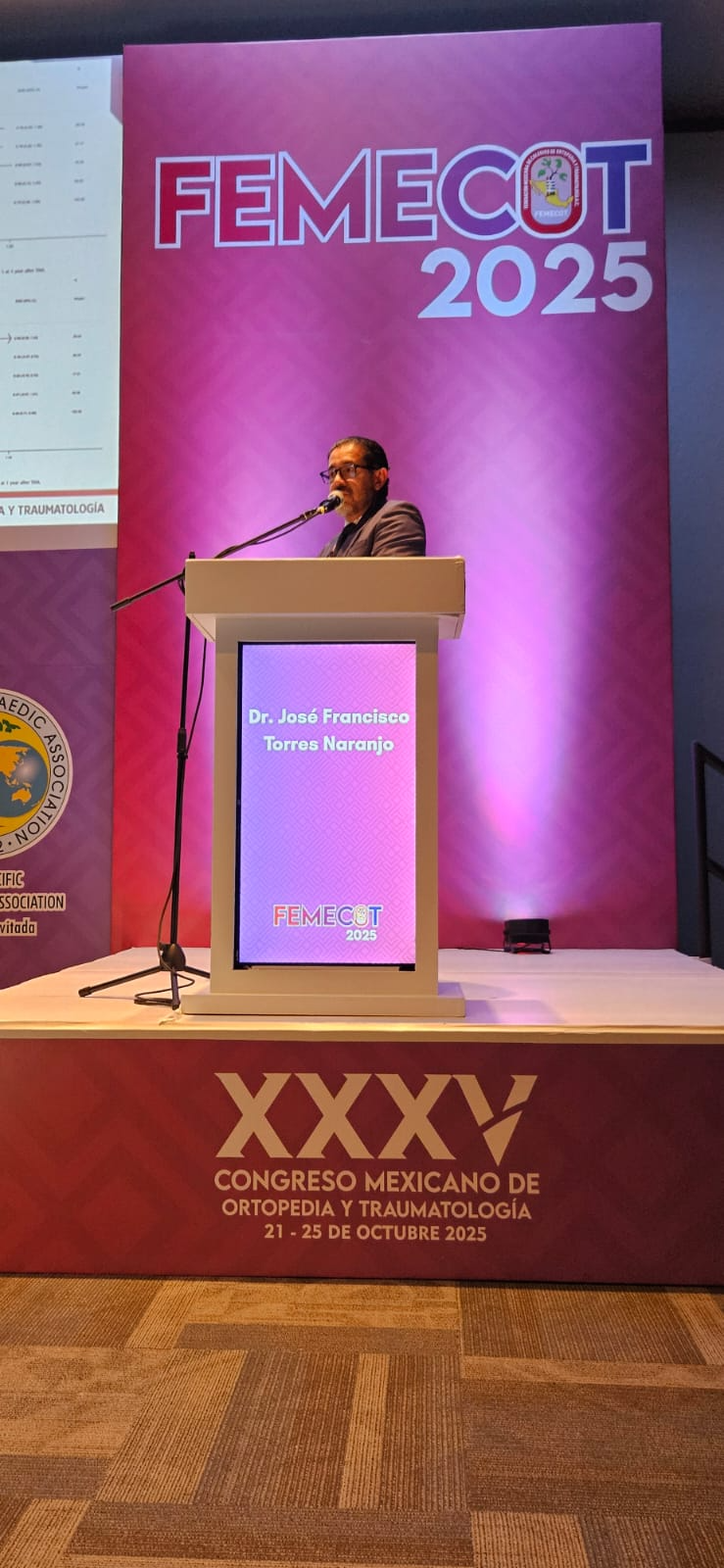
Dr. Francisco Torres Naranjo
ISCD Latin American Panel
The ISCD Latin American Panel successfully held the first ISCD Latin America Summit on DXA 2025 on November 8, 2025. Delivered virtually, this milestone event brought together 180 live participants representing 14 countries: México, Colombia, Brasil, Bolivia, Argentina, Uruguay, Chile, Perú, Ecuador, Panamá, República Dominicana, Venezuela, Honduras, Costa Rica, and Guatemala.
The Summit delivered high-level education on best practices in DXA acquisition and interpretation, pediatric DXA, TBS, vertebral fracture assessment, body composition, periprosthetic DXA, and emerging areas such as AI-assisted imaging and multimodal assessment.
Engagement was strong during sessions on pediatric DXA, body composition, AI + multimodality, and periprosthetic imaging.
Participants reported increased confidence in DXA interpretation across age groups and reinforced ISCD’s role as the regional reference for quality standards, certification pathways, and best practices. Attendees also expressed strong interest in future ISCD collaborations and educational opportunities.
This inaugural Summit demonstrated the strategic value of the ISCD Regional Panel Grants and the importance of continued, region-focused densitometry education.
In August, the ISCD Latin American Panel made significant contributions to two high-impact academic events in Guadalajara, Mexico, reinforcing ISCD’s visibility and collaboration in the region.
At the Bone & Muscle Expert Meeting 2025 (Aug 13), organized by CIO and AMMOM, Dr. Francisco Torres Naranjo presented on therapeutic response markers to an audience of 176 specialists, including endocrinologists, rheumatologists, orthopedic surgeons, gynecologists, and DXA technologists. The lecture sparked dynamic discussions on DXA precision and clinical applications, with highly positive feedback and strong participant engagement.
Later in the month, at the XXI Congress of the Jalisco Society of Endocrinology and Nutrition (Aug 21–23), ISCD Panel member Alan Christopher Guzmán presented on vertebral fracture detection with DXA to nearly 100 attendees, primarily endocrinologists and internists. The session highlighted the clinical importance of vertebral fracture assessment and created new opportunities for educational collaboration.
Together, these activities not only advanced knowledge on densitometry and bone health but also generated momentum for ISCD membership growth, certification interest, and regional partnerships. These meetings are specifically tailored for professionals interested in musculoskeletal health who may be unfamiliar with ISCD. As such, they provide an excellent opportunity to enhance the Society’s visibility and promote its educational programs in Latin America.
Additionally, the Latin American ISCD Panel continues its collaborative work with orthopedic societies across Latin America and Spain, including FEMECOT, AMMOM, ACOMM, SCCOT, SECOT, SEFRAOS, and SEIOMM, to develop a consensus document regarding the clinical application of periprosthetic densitometry in arthroplasty candidates. The project has made significant progress and is advancing with the support and alignment of all participating societies.
Asia Pacific Panel
ISCD Quality Bone Densitometry Course for Clinicians
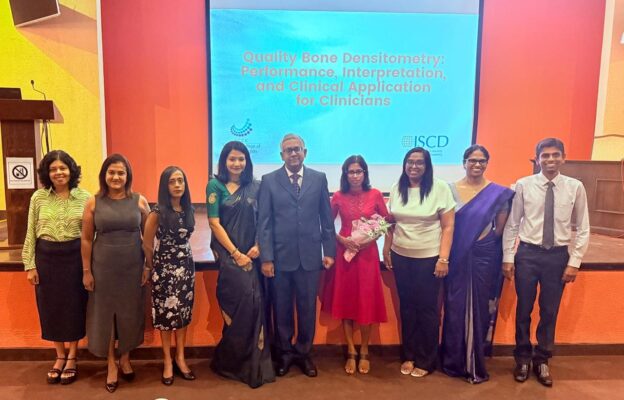
Colombo, Sri Lanka (17-18 Oct 2025)
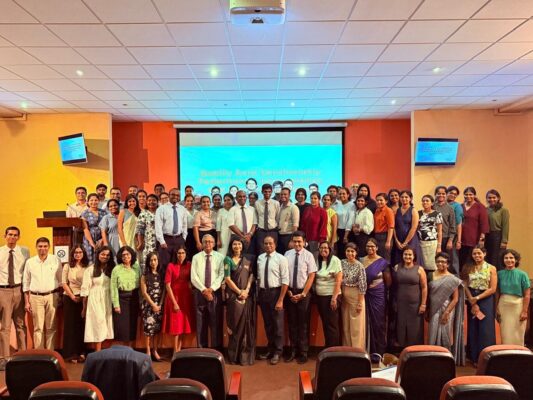
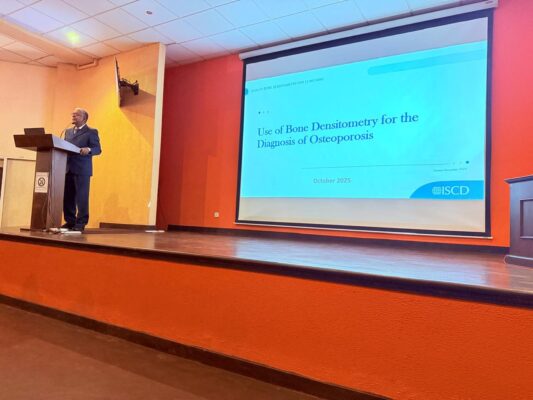
The first ever locally hosted ISCD bone Densitometry course for clinicians was successfully concluded in Colombo, Sri Lanka on 17-18 October 2025, utilizing the funds allocated for ISCD Asia Pacific regional panel grant, 2025. Dr. Chandrika Subasinghe, member AP panel, organized the course with the support from the local host, Sri Lanka College of Endocrinologists. It was not just an ordinary bone course, but it was the first of that kind as well was a turning point in osteoporosis care in Sri Lanka, as both the faculty including Prof Manju Chandran, Chairperson – AP panel and Prof Thomas Paul, vice chair, AP panel and all the participants agreed upon. It was a well-attended and well engaged course by specialist in different fields.
Canadian Panel
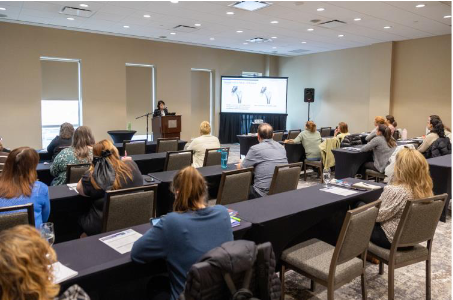
The Canadian panel of the ISCD conducted Quality Bone Densitometry (QBD) Courses for Physicians and for Technologists on 5-6 April 2025 in Montreal, Quebec, in conjunction with the Canadian Association of Radiologists (CAR) Annual Scientific Meeting. The event was supported by an ISCD Regional Panel grant.
The technologist course was 2 days and the physician course was 1 day with 56 total attendees. This was the first in-person ISCD course given by the Canadian panel since before the Covid pandemic, and all speakers were members of the Canadian panel. The feedback received from participants was overwhelmingly positive.
Extensive in-kind support in organizing the course was provided by CAR, as well as the Canadian Association of Medical Radiation Technologists (CAMRT). Industry support was obtained from Aymes Medical and Hologic Canada. Endorsement was obtained from Osteoporosis Canada and the Canadian Association of Nuclear Medicine.
